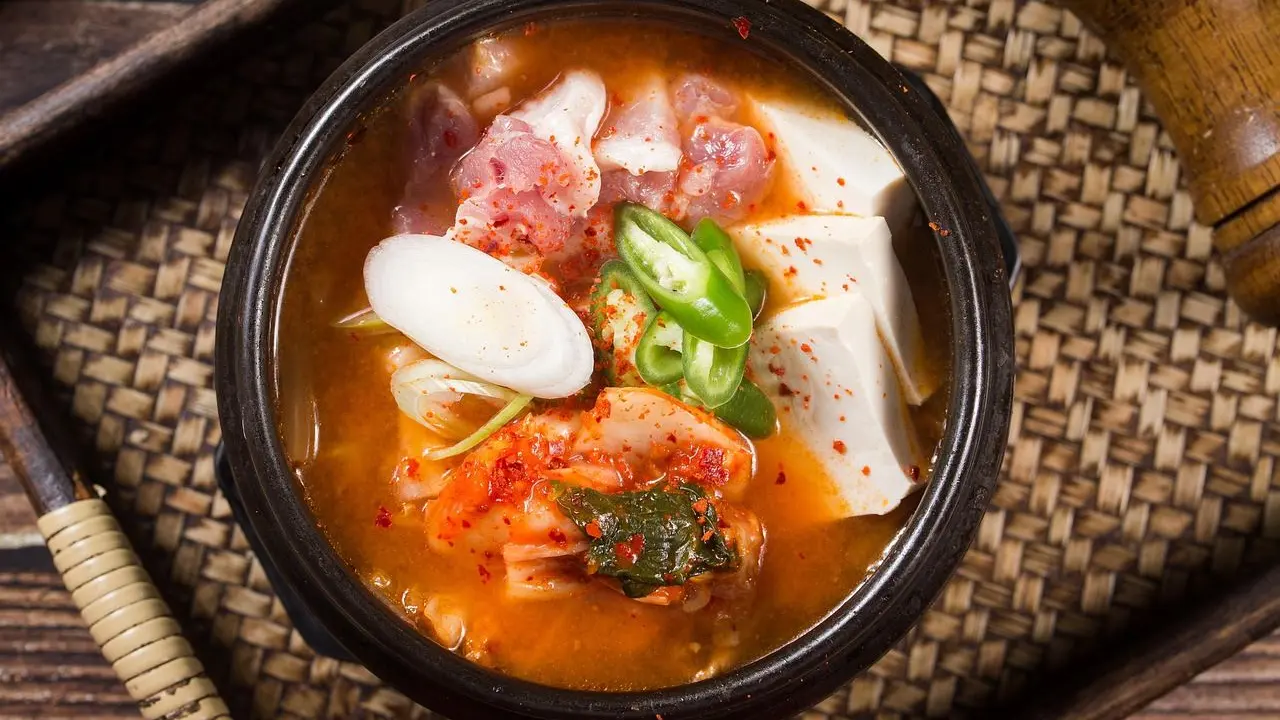
Want a bubbling, spicy bowl of comfort at home? This kimchi jjigae recipe uses sour kimchi, pork and tofu in a single pot, and it’s ready in well under an hour.
This stew is one of many everyday dishes covered in the korean food guide.
| Item | Value |
|---|---|
| Kimchi | 2 cups packed, fully fermented |
| Pork belly | 4 ounces |
| Tofu | 6 ounces |
| Water or broth | 2 to 2.5 cups |
| Frying kimchi and pork | 5 to 7 minutes |
| Fridge storage | 3-4 days |
Quantities and timings come from the two-serving recipe at Korean Bapsang, and the storage time from Takes Two Eggs. Recipes get updated, so check the sources before you rely on these figures.
What is kimchi jjigae?
Kimchi jjigae is, in the words of Korean Bapsang, a classic Korean stew made with flavor-packed, old kimchi. It is also called kimchi soup or kimchi stew, with kimchi as the star ingredient.
It is often cooked in an individual-sized stone pot and served with steamed rice and banchan, the small side dishes of a Korean meal, according to Takes Two Eggs.
The stew looks fierce, but The Woks of Life points out that Korean chili flakes are somewhat mild compared with the crushed red pepper flakes found at a pizza parlor. You can adjust the heat to suit your own taste.
If you would rather eat on the move than at the table, the guide to korean street food is a good next stop.
Ingredients you need
The Korean Bapsang version serves 2 and keeps the shopping list short:
- 2 cups packed bite-size kimchi, fully fermented
- 4 ounces fresh pork belly, or other pork with some fat
- 6 ounces tofu
- 2 scallions
- 1 to 3 teaspoons gochugaru (Korean red chili flakes), to taste or omitted
- 1 teaspoon minced garlic
- 1 tablespoon cooking oil
- 1/2 cup juice from the kimchi, if available
- Salt or soup soy sauce, and pepper
The kimchi matters most. Korean Bapsang says to use old, sour kimchi, and Takes Two Eggs notes that in a Korean market older kimchi is typically labeled mukeunji.
The same source adds that the older and more fermented the kimchi, the richer and more flavorful the stew.
The Takes Two Eggs version builds a fuller pot, and its ingredient notes give every extra a job. If you want to go beyond the short list above, this is what each one adds:
- Yellow onion and garlic are the main aromatics, developing a naturally sweet and savory flavor.
- Pork belly complements the fermented kimchi flavor.
- Shiitake mushrooms add another layer of umami.
- Brown sugar adds sweetness to balance the spice and tanginess of the kimchi.
- Gochujang, a Korean red pepper paste, is spicy, salty, earthy and sweet.
- Soup soy sauce is slightly saltier and lighter in color than regular soy sauce.
- Sesame oil adds a nutty, savory flavor.
Firm or soft tofu both suit this stew because it holds its shape in the pot, per Takes Two Eggs. The Woks of Life says pork belly or shoulder works, so you can pick whichever cut you can find.
Serve the stew the Korean way, with rice and a few side dishes. Takes Two Eggs suggests Korean purple rice, plus banchan such as mayak eggs, braised potatoes (gamja jorim) or cucumber salad (oi muchim).
The same page says you can find all of these ingredients at your local Korean grocery market, so a single trip should cover the shopping.
Step-by-step method
The key move is to fry the kimchi and pork together before any liquid goes in. Korean Bapsang says this step develops extra flavor.
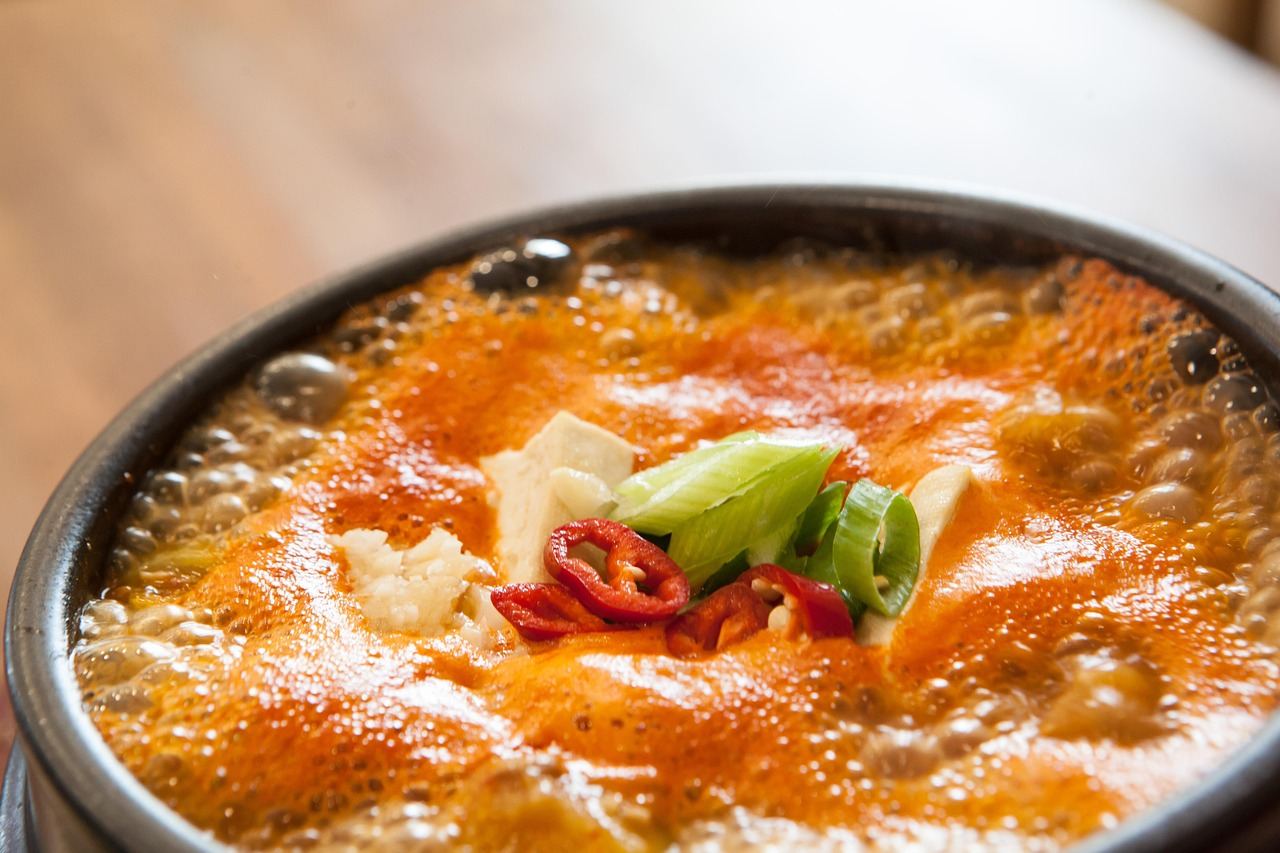
Follow these steps, which come from the Korean Bapsang recipe:
- Cut the kimchi and pork into bite-size pieces. Slice the tofu about 1/2-inch thick and roughly chop the scallions.
- Heat 1 tablespoon of oil in a small to medium pot. Add the kimchi, pork, gochugaru and garlic, and cook over medium-high heat for about 5 to 7 minutes, until the kimchi softens and the pork is cooked through.
- Pour in the kimchi juice and about 2 to 2.5 cups of water or broth. Bring to a boil and keep cooking for 5 minutes.
- Reduce the heat to medium and boil, covered, for about 15 minutes. Add more water if the pot gets too thick.
- Drop in the tofu and scallions, then season with salt or soup soy sauce and pepper.
- Boil until the tofu is cooked through, about 5 minutes, and serve while it is still bubbling.
Taste before you salt. Korean Bapsang says salt is usually not necessary, unless the kimchi was lightly seasoned or kimchi juice is not available.
Other cooks run on different clocks. The Woks of Life lists a total of 40 minutes for a six-serving pot, while Takes Two Eggs says its version takes less than 30 minutes.
Swaps and variations
For a pork-free tuna version, Korean Bapsang leaves out the pork and adds a can of tuna with its oil along with the kimchi juice and water. You then boil for 10 to 15 minutes before carrying on with the rest of the recipe.
Takes Two Eggs lists many other options:
- Protein: pork ribs, sliced beef, canned tuna, shrimp, clams or squid.
- Broth: chicken, beef or vegetable broth in place of anchovy broth.
- Vegetables: carrots, zucchini, other mushrooms or spinach.
- Extras: doenjang (soybean paste), ramen noodles or sliced cheese.
The The Woks of Life version adds salt, sugar, gochujang (red pepper paste), sesame oil and chicken stock, and it serves 6.
The same Takes Two Eggs page suggests vegetable broth for a vegetarian version. Tuna and anchovy broth are fish, so for meat-free ideas see vegetarian korean food.
Tips for deeper flavor and storing leftovers
These small habits make the biggest difference to the broth:
- Use rice-rinsing water (ssalddeumul) as the base, taken from the second or third rinse. Korean Bapsang says it thickens the broth slightly and enhances the flavor.
- Keep the kimchi juice. Korean Bapsang says it adds lots of flavor to the broth.
- Simmer over low to medium-low heat so the flavors meld, per Takes Two Eggs.
- Make anchovy broth ahead if you use it, so the stew comes together quickly.
- For a spicier pot, Takes Two Eggs suggests adding 1-2 tablespoons of gochugaru.
To store leftovers, let the stew cool, then refrigerate it in an airtight container for 3-4 days, according to Takes Two Eggs. Reheat in a pot over medium heat, stirring now and then.
The same source says you can freeze the soup for up to 3 months but does not recommend freezing the tofu. Thaw it in the refrigerator overnight and add fresh tofu when reheating.
Frequently asked questions
Is kimchi jjigae very spicy?
Show answer
It depends on how much gochugaru you add. Korean Bapsang gives a range of 1 to 3 teaspoons that you can adjust or omit, and Takes Two Eggs says its moderate amount gives mild to medium heat.
Can I use fresh kimchi?
Show answer
You can, but the sources recommend old, sour, well-fermented kimchi for the richest flavor. Fresh kimchi will give a milder, less tangy broth.
Can I make it without pork?
Show answer
Yes. Korean Bapsang swaps the pork for canned tuna, and says salmon works well too.
Can I make it ahead?
Show answer
Yes. Takes Two Eggs says you can make the stew in advance and reheat it, and it recommends adding the tofu only when you are ready to serve.