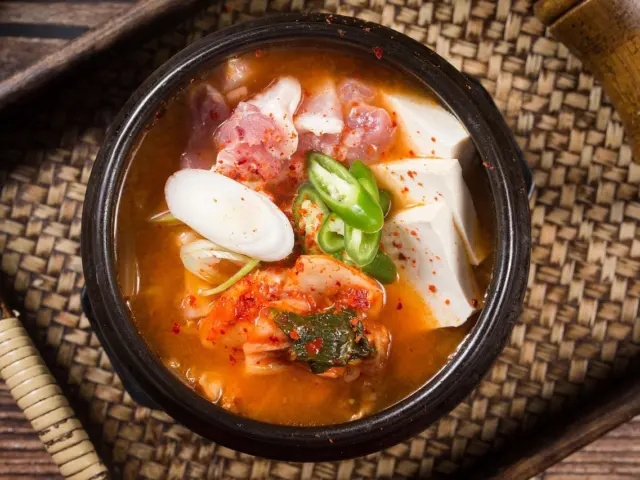
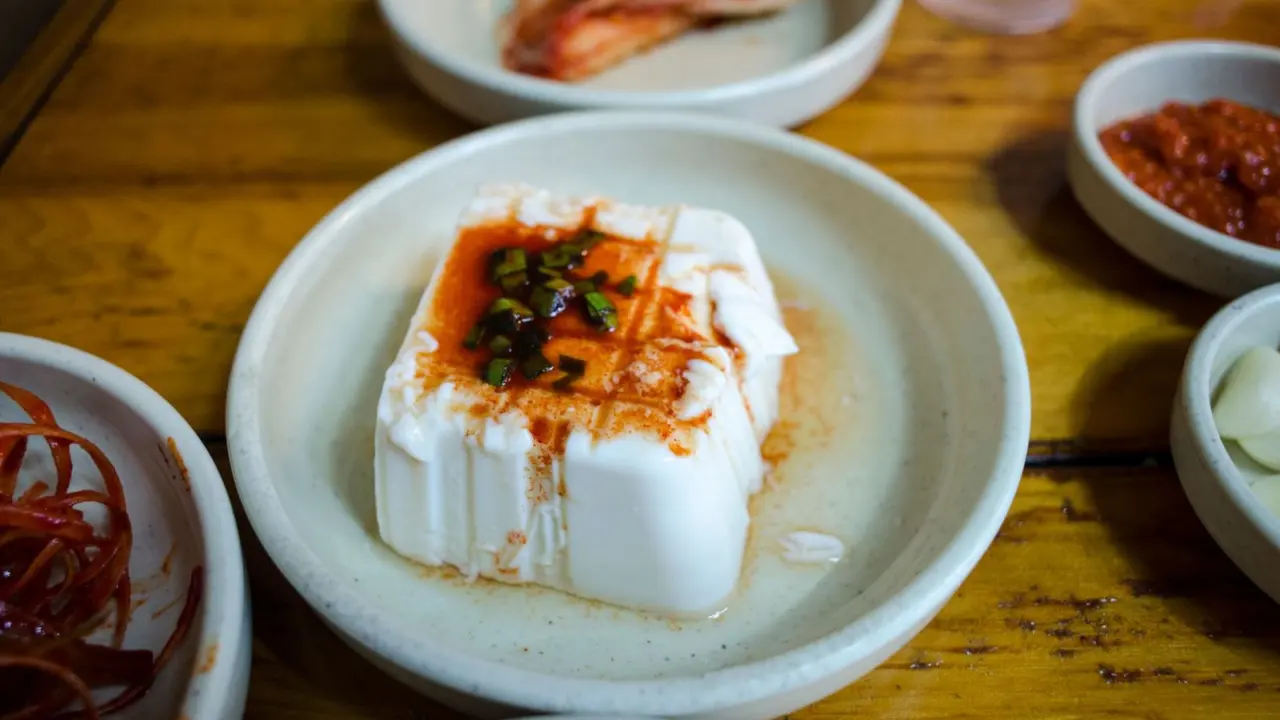
Worried you’ll only get plain rice? Good vegetarian korean food is easier to find than you think: rice, namul and jeon are meatless, and temple food is plant-based. Just ask about broth and salted shrimp.
For the wider picture of dishes and cooking, see our korean food guide.
| Item | Value |
|---|---|
| Forbidden pungent roots in Korean temple food | 5 |
| Extra ingredients added to temple rice | At least 5 |
| Wild vegetables used in temple cooking | Well over 20 kinds |
| Livestock share of total greenhouse gas emissions (FAO report) | 18 percent |
The figures come from the Hansik Promotion Institute magazine and a December 2009 JoongAng Daily article. Figures can change, so check the source before you rely on them.
Why Korean food suits vegetarians
The Hansik Promotion Institute’s magazine explains that many Korean foods are vegetable-based already. That is one reason vegetarian eating arrived in Korea later than elsewhere: there was no need for a separate category, because the principles already shaped much of the cuisine.
The same article names three everyday building blocks that are all vegetarian:
- Rice, the staple food of Korea
- Namul, the seasoned vegetable side dishes
- Jeon and buchimgae, the savory pancakes
That makes it quite easy to design a meatless meal around a bowl of rice and a spread of side dishes. The article adds that removing meat broth and seafood such as saeujeot (salted shrimp) from the seasoning opens up even more vegetarian dishes.
The flip side is worth knowing. If those two ingredients are what you take out, they are also what you should watch for when a dish arrives at a regular restaurant.
What is Korean temple food?
The Hansik article describes temple food as vegetarian cuisine that follows the Buddhist precept against taking life, so it contains no meat or artificial seasonings. It has two qualities: refraining from excessive eating, and highlighting natural flavors entirely with natural ingredients.
One feature sets Korean temple food apart from other vegetarian cooking and from the temple food of other countries. It leaves out osinchae, the five forbidden pungent roots:
- Scallions
- Garlic
- Chives
- Dallae (wild chives)
- Mureut (Chinese squill)
According to the article, their strong flavors are believed to distract monks from meditation and mental training. As a result, Korean temple food is described as both flavorful and easy to digest.
The article also treats temple food as a fit for vegans, since it uses only vegetables and so follows the rules of veganism. It defines veganism as forbidding all animal-derived food, including dairy products such as milk and eggs. As of that June 2022 article, temple cuisine restaurants were increasing in number not only in Seoul but throughout Korea.
It is also a gentle first step. The article calls temple food an easy recommendation for first-time visitors because of its mildness and absence of pungent odors such as garlic and scallions.
Dishes to look for
One accessible temple dish is sanchae bibimbap, made with wild mountain greens. Most Korean Buddhist temples sit deep in the mountains, which the Hansik article links to the long tradition of cooking with wild greens.
The JoongAng Daily’s December 2009 feature points to Gurye County in South Jeolla as perhaps the best representative of Korean temple cuisine. It describes Hwaeomsa Temple there as established 1,500 years ago. Well over 20 different wild vegetables go into soups, main dishes and side dishes in temple cooking.
The rice is worth a look too. At least five extra ingredients are added to white rice in temple cooking, which the article says increases the nutritional value and enhances the flavor. They include:
- Black rice
- Glutinous rice
- Millet seeds
- Chestnuts
- Chinese dates
As a finishing touch, lotus leaf powder is sprinkled on top and the rice is crowned with a lotus flower petal.
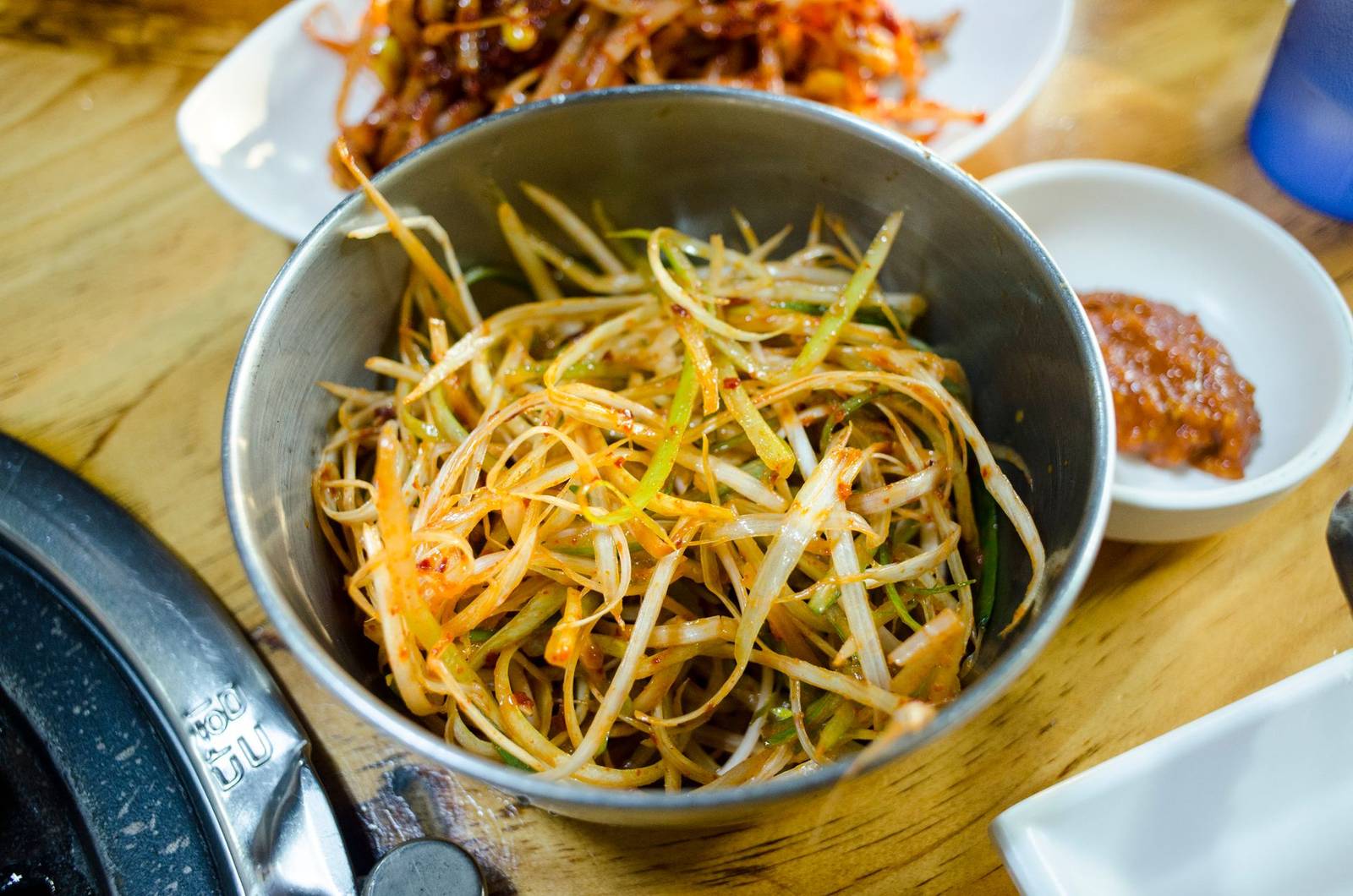
How to order without surprises
A regular Korean restaurant is not set up around vegetarian rules, so a few questions help. These follow directly from the ingredients the Hansik article says to remove:
- Is the broth made with meat?
- Does the seasoning contain salted shrimp (saeujeot) or other seafood?
- If you avoid eggs and dairy, are those used in the dish?
Temple food is the simplest route, because it leaves out meat by definition. The Hansik article notes it can be experienced through the many temple stay programs offered throughout Korea. Even so, confirm the details with whoever is serving you.
Kimchi deserves a separate look, since seasoning pastes are where seafood can enter. If you want full control over what goes in, how to make kimchi is a good place to start.
Cook a temple-style dish at home
Korean Bapsang says temple cooking is primarily based on seasonal plant-based ingredients, so temple dishes are vegan. Its zucchini dumplings (hobak mandu) are described as a summer favorite at temples in Korea.
- Cut the zucchini into thin disks, then into matchsticks. Sprinkle lightly with salt and let it sit for about 15 minutes until wilted, then gently squeeze out the liquid.
- Cut mushrooms into thin strips and mix them with soup soy sauce (or salt) and a little sesame oil.
- Stir fry the zucchini in two teaspoons of sesame oil until cooked and dry, then spread it on a large plate to cool.
- Stir fry the mushrooms for 2 minutes, adding a little water or mushroom-soaking water if the pan gets dry.
- Combine the two, adjust the seasoning, and place one heaping teaspoonful on a wrapper. Wet the edges, fold into a half-moon and seal tightly.
- Boil the dumplings a few at a time, only until they come up to the surface, then plunge them into cold water.
- Serve cold with a dipping sauce of 2 teaspoons soy sauce, 1 teaspoon vinegar and 2 teaspoons water, if you like.
The recipe does not say what the wrappers contain, so read the ingredient list if you avoid eggs or dairy. Once you are comfortable cooking without meat broth, the kimchi jjigae recipe is a natural dish to adapt with the same swap.
Why more people are eating this way
The Hansik article says people once turned to vegetarianism mainly for health. Interest among younger Koreans is now tied more to value consumption, including concern for animal rights and the environment.
On the environmental side, it cites the FAO report Livestock’s Long Shadow, which says the livestock industry is responsible for 18 percent of total greenhouse gas emissions. Treat that as the report’s claim as quoted by the magazine, not as a figure to rely on without checking.
Food businesses have noticed. In a May 2023 report, The Korea Times said CJ CheilJedang had signed a partnership with Doban HC, an operating holdings company of the Jogye Order, to launch jointly developed temple foods. The same report said Shinsegae Food offered more than 20 kinds of vegan menu items with temple food expert Park Sung-hee, who does not use butter, milk or eggs.
Chefs are paying attention as well. According to the Hansik article from June 2022, Le Cordon Bleu decided to adopt Korean temple food as a regular course of its Plant-Based Culinary Arts program.
Frequently asked questions
Is Korean temple food vegan?
Show answer
The Hansik article says it follows the rules of veganism, and Korean Bapsang calls temple dishes vegan. Restaurants and packaged products can differ, so ask about eggs, dairy and broth.
Why is there no garlic in temple food?
Show answer
Garlic is one of the five forbidden pungent roots in Korean temple kitchens. The tradition keeps these roots out so that monks’ focus is not pulled away from their practice.
Can I eat vegetarian at an ordinary Korean restaurant?
Show answer
Rice, namul and jeon are vegetarian, according to the Hansik article. The risk lies in meat broth and seafood seasonings such as salted shrimp, so ask before you order.
Is temple food spicy?
Show answer
Not especially. The Hansik article says it is milder than other Korean food and suits first-time visitors, partly because it avoids garlic and scallions.