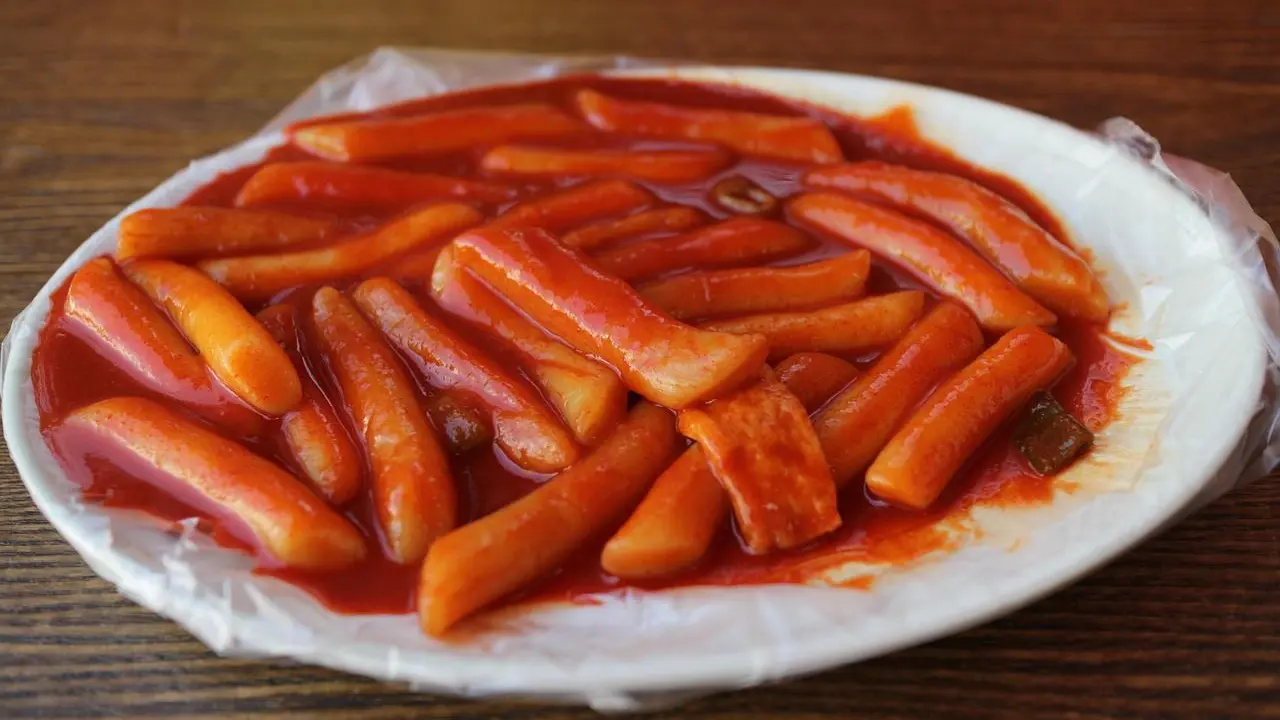
Want chewy, spicy street food without leaving your kitchen? This tteokbokki recipe simmers rice cakes in a gochujang, soy and sugar sauce until it thickens. Soak, boil, add vegetables, serve.
This page is part of the wider korean food guide on Korean dishes and home cooking.
| Item | Value |
|---|---|
| Tteokbokki rice cakes | 1 pound |
| Anchovy broth or water | 3 cups |
| Gochujang | 3 tablespoons |
| Boiling the rice cakes | 8-10 minutes |
| Adding vegetables and fish cakes | 4-6 minutes more |
| Servings | 3 |
These figures come from the Korean Bapsang tteokbokki recipe. Amounts and times can change with your rice cakes and pan, so check the source before you rely on them.
What is tteokbokki and where does it come from?
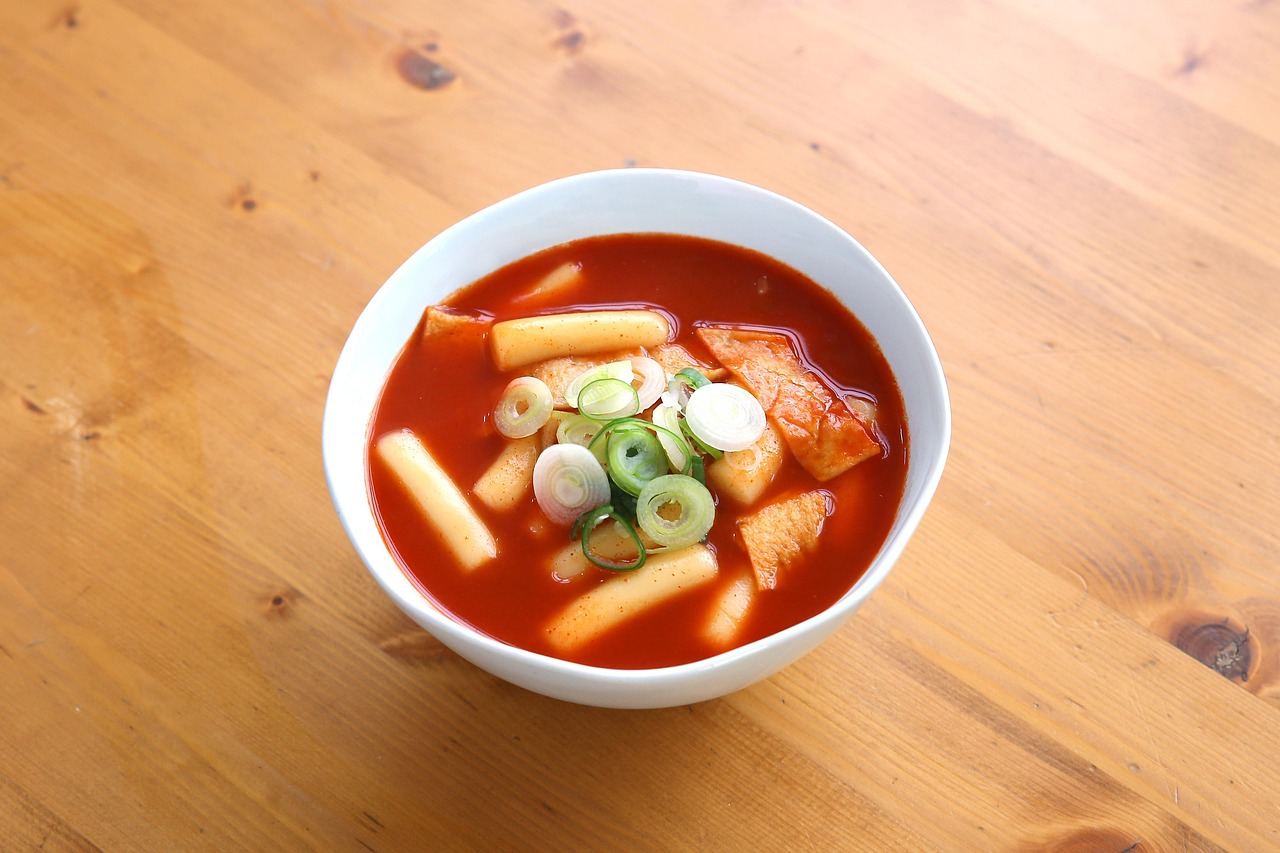
Tteokbokki literally means “stir-fried rice cake”, and Korean Bapsang notes it is also spelled ddukbokki, ddeokbokki, dukbokki or topokki. The dish is sold as street food and cooked at home alike. Chewy rice cakes in a red sauce are the version most people picture.
That red, spicy style is fairly young. The same source says it was developed in 1953, the year the Korean War ended, by a woman named Ma Bok-rim in the Sindang-dong neighborhood in Seoul. It is set apart from gungjung tteokbokki, an older, mild version with a much longer history.
SBS Food’s tteokbokki recipe, published in November 2023, calls these sweet and spicy chewy rice cakes the quintessential Korean street food. It is a fair description of why the dish is so easy to love: sweet, hot, salty and chewy in one pan.
Ingredients you need
The star is garaetteok, a cylinder-shaped white rice cake made with short grain rice, according to Korean Bapsang. Thinner, shorter rice cakes are the ones used for tteokbokki, and you can find them fresh, refrigerated or frozen at Korean markets. If your shelves are bare, start with the korean pantry essentials before you go shopping.
The quantities below follow the Korean Bapsang recipe, which serves 3:
- Rice cakes: 1 pound of tteokbokki tteok.
- Fish cake (eomuk): 1-2 sheets.
- Green cabbage: 4 ounces, plus scallions.
- Garlic: 1 tablespoon, minced.
- Broth: 3 cups of anchovy broth or water.
- Gochujang: 3 tablespoons.
- Gochugaru: 1-3 teaspoons, depending on how hot you like it.
- Soy sauce: 1 tablespoon.
- Sugar: 2 tablespoons.
- Corn syrup: 1 tablespoon.
The classic version uses fish cake, cabbage, scallions and garlic as its add-ins. Gochujang, soy sauce and sugar are the main seasonings, and Korean Bapsang says gochugaru raises the heat without altering the saltiness and sweetness. Syrup is a common extra that gives the dish a sheen.
Anchovy broth is typically used for depth of flavor, but plain water works too. That makes the dish forgiving if you do not keep dried anchovies around.
How to cook tteokbokki step by step
Cooking comes down to soaking, boiling and timing. The steps follow the Korean Bapsang recipe, which soaks the rice cakes for about 20 minutes, or longer if they are refrigerated. Freshly made soft rice cakes do not need soaking.
- Soak the rice cakes for about 20 minutes, longer if they are refrigerated.
- Cut the fish cake, cabbage and scallions into pieces about 2-inch long.
- Stir the sauce ingredients into the broth until the gochujang dissolves, bring it to a boil, then add the rice cakes.
- Boil for about 8-10 minutes, until the rice cakes are very soft and the sauce has thickened. Stir often so they do not stick to the bottom of the pan.
- Add the vegetables, garlic and fish cakes, and keep boiling for 4-6 minutes more.
- Drop in the scallions and any boiled eggs with 2 to 3 minutes remaining, then taste, adjust and serve hot.
If you are making your own anchovy broth, boil dried anchovies, dried kelp (dasima) and onion in water, then remove them before adding the sauce. If the pan gets too dry, add more broth or water as necessary.
Timing varies by brand. SBS Food’s recipe soaks for only 10 minutes and then cooks on a rapid boil, stirring, for 8-10 minutes. Treat the clock as a guide and judge by the softness of the rice cakes.
Make it milder, vegan or soupy
To make it less fiery, reduce the gochujang and leave out the gochugaru entirely. Korean Bapsang adds that you will need more soy sauce if you cut the gochujang, because the paste also adds saltiness. For a completely mild dish, it suggests gungjung tteokbokki.
For a plant-based vegan tteokbokki, use water or vegetable broth instead of anchovy broth. Leave out the fish cake or swap in fried tofu pockets called yubu, and add mushrooms if you like.
The dish has kept evolving, and people now add many extras to the pan:
- Ramyun noodles
- Dumplings
- Boiled eggs
- Hot dogs
- Seafood
- Cheese
A soupy version is also popular. The Korea Herald’s tteokbokki with soup recipe, published in December 2024 from W Table, simmers the rice cakes in a savory-sweet, spicy kelp-stock broth for 3 to 4 minutes after it boils.
Serving and reheating leftovers
Serve the pan hot, straight from the stove, while the rice cakes are at their chewiest. If you are planning a grill night, the how to eat korean bbq guide is worth reading before you decide what else goes on the table.
Leftovers need a little care. Korean Bapsang warns that these rice cakes do not reheat well in the microwave, where they can get dry and hard. Its best option is to simmer them in a sauce pan, covered, with some water or broth over medium low heat, stirring once in a while.
Frequently asked questions
Why are my rice cakes still hard after soaking?
Show answer
Some refrigerated and frozen rice cakes are very dry and hard, according to Korean Bapsang. If yours are like that, soak them for hours or even overnight.
Do I need anchovy broth?
Show answer
No. Tteokbokki is commonly made with water, and you can also use vegetable or chicken broth, as Korean Bapsang explains.
How do I make tteokbokki less spicy?
Show answer
Reduce the gochujang, leave out the gochugaru and add a little more soy sauce to make up the saltiness. Gungjung tteokbokki is the completely mild option, per Korean Bapsang.
Can I make tteokbokki vegan?
Show answer
Yes. Use water or vegetable broth, and omit the fish cake or replace it with fried tofu pockets called yubu, as Korean Bapsang suggests.
What is the best way to reheat tteokbokki?
Show answer
Simmer it in a covered sauce pan with a little water or broth over medium low heat. The microwave tends to leave the rice cakes dry and hard, per Korean Bapsang.