Worried about fumbling at the grill? Here is how to eat Korean BBQ: wait for elders, use chopsticks, wrap meat in lettuce for one bite, and ask for more banchan whenever you need it.
This page belongs to our korean food guide, where you can find more Korean dining customs and dishes.
| Item | Value |
|---|---|
| Banchan side dishes per meal | 4 to 20 small dishes |
| Banchan refills | Generally free, but not bottomless |
| Who starts eating | The eldest person at the table |
| What the spoon is for | Rice and soup |
| Best group size for BBQ | At least 3 diners |
Figures and customs can change, so check the source before you rely on them: see this Seoul dining etiquette guide and this Tasting Table restaurant guide.
What a Korean BBQ table looks like
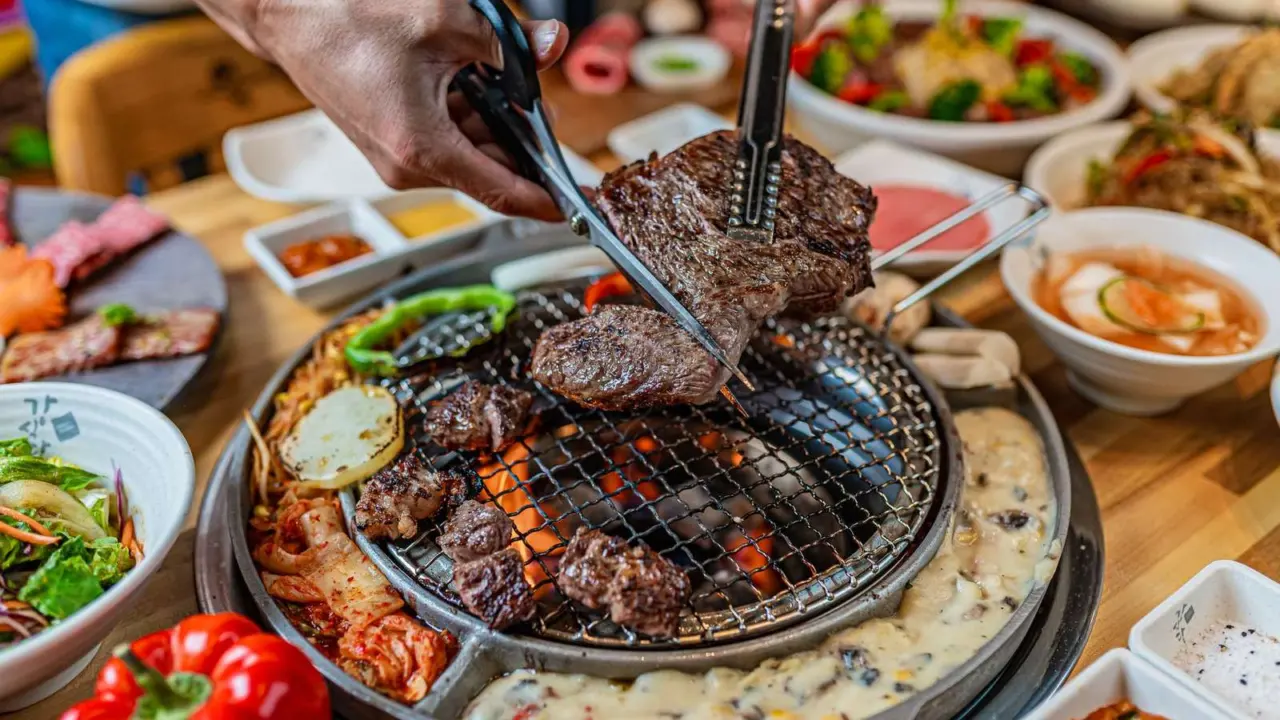
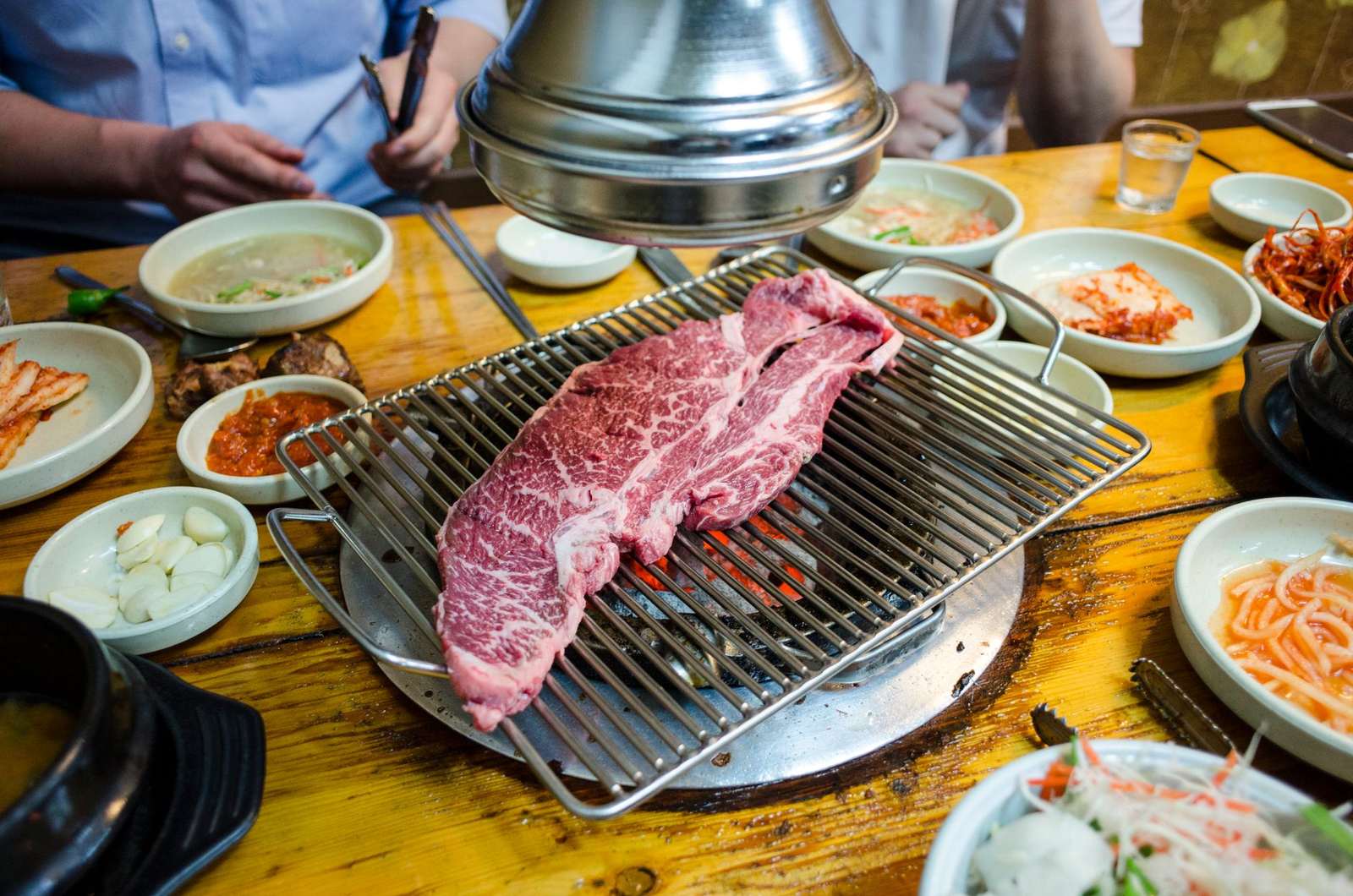
At a Korean BBQ restaurant you sit at a table with a built-in grill and cook your own meat, which arrives pre-marinated and ready for grilling. That is how Tasting Table described the setup in June 2024. The grill is shared, so most of the etiquette is about sharing well.
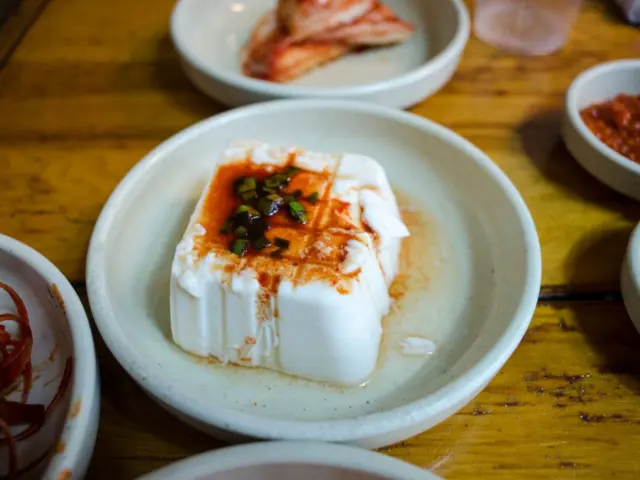
Alongside the meat you get banchan, communal side dishes meant to be enjoyed with the main courses. The same Tasting Table piece lists examples such as:
- Seasoned soybean sprouts, known as kongnamul
- Spicy pickled cabbage, known as baechu kimchi
- Pickled radish, known as danmuji
- Different types of edible seaweed
A Seoul dining etiquette guide says a Korean meal can come with anywhere from four to twenty small side dishes. It also says Korean dining etiquette is built on respect for elders and shared communal eating, which explains most of the rules below.
How to order at a Korean BBQ restaurant
Good ordering starts before you sit down. A Tasting Table restaurant guide advises you to do your research ahead of time to see what a restaurant specializes in. It also says to make sure the dining room has grills on every table, since not every Korean restaurant is a barbecue specialist.
Then order in this sequence:
- Bring company. The same guide says the best Korean barbecue nights often feature at least three hungry participants, because the meal is served family-style.
- Start with the standard grill items, such as pork and beef.
- Add variety for a bigger group, such as Korean mackerel and shrimp.
- Order the ssam greens. Many places now list lettuce, perilla, rice paper and pickled daikon as an extra, and the guide still recommends ordering them.
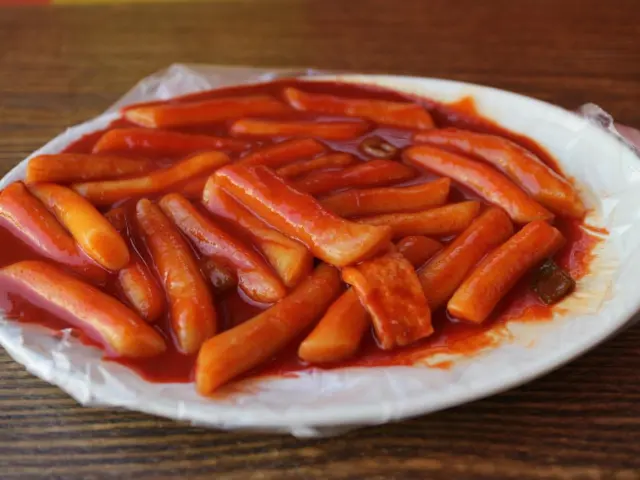
- Add shareable sides such as pajeon (a savory pancake), mandu and ddukbokki, which can be split across the table.
If ddukbokki is the side dish you are most curious about, our tteokbokki recipe shows how to cook it at home.
Banchan usually arrives shortly after your table decides on its meat order. You do not need to order it separately.
Table manners to follow at the grill
The single most important rule in the Seoul guide is to wait for the eldest person to start eating before you do. Most other customs follow from that respect for elders. If you are unsure, watch the table and follow the host.
Before you eat, you can say “Jal-meog-ges-seum-ni-da,” which the guide translates as “I will eat well.” It is a small way to show appreciation to whoever is hosting or cooking.
Chopsticks and spoon
Each utensil has a job, and the rules are easy to remember:
- Use the spoon for rice and soup.
- Use chopsticks for everything else, including banchan, meat, vegetables and kimchi.
- Never use both at the same time; put one down before you pick up the other.
- Never stick chopsticks upright in rice, because it mimics the incense placed at funerals.
Keep your hands off the food, too. Chef John Bach, executive chef and founder of Seoul Food KBBQ Catering in Los Angeles, told Tasting Table it is unacceptable to eat with your hands, for the most part. The exceptions are ssam vegetables and bone-in ribs.
Sharing the grill and the dishes
Bach’s advice to Tasting Table boils down to being tidy. Do not toss around the banchan or meat with your chopsticks looking for a better piece; touch only the piece you will eat. Do not leave a trace of what was on your spoon in the soup or any shared dish.
For shared dishes, the Seoul guide says to use your chopsticks to transfer food to your own plate first, then eat from your plate. It also notes that in Korea you do not lift your rice or soup bowl. At very casual meals among friends these rules loosen, but they are the safe default.
How do you wrap and eat ssam?
Ssam is the lettuce wrap at the heart of the meal, and it is the polite exception to the no-hands rule. Tasting Table’s ssam guide describes the build like this:
- Select a crisp lettuce leaf.
- Place a juicy piece of barbecued meat, dipped in sauce, on top.
- Add a touch of kimchi.
- Add your choice of another banchan.
- Fold it up and eat it in a single bite.
The trick is that less is more. The same guide says ssam is meant to be eaten in one big bite, more like sushi than tacos, so do not stuff the wrap with more than you can eat in one bite. A Tasting Table restaurant guide adds that bits of banchan inside your ssam bring extra texture.
Banchan, drinks and calling the server
Banchan rules
Banchan belongs to the whole table, so a few habits keep things pleasant. The Seoul guide suggests:
- Do not pile your plate high with banchan; take small portions and refill as needed.
- Do not take the last piece of a shared dish without offering it around first.
- Remember that refills are generally free, but banchan isn’t bottomless.
- If a dish runs out and the server does not refill it, say “more banchan please” in Korean (the guide gives the phrase as Banchan deo juseyo).
Another Tasting Table guide says banchan is meant to act as a crunchy intermission between bites of salty meat, like a pickle plate. So pace yourself rather than finishing it all on arrival.
Drinks
Tasting Table’s ssam guide suggests pairing the wraps with soju, a spirit made from distilled rice, or makgeolli, a cloudy Korean rice wine. The Seoul guide calls drinking etiquette its own discipline entirely, so it deserves more space than this page can give it.
Getting the server’s attention
Because you cook at the table, servers check in less than you may expect. According to Tasting Table, all you have to do is wave, make eye contact, or politely say “excuse me.” When you have their attention, ask for everything you need all at once instead of asking for something new each time they return.
If there is a bell on the table, the same source says you should not feel weird about using it. Once you are comfortable at the grill, you could try cooking Korean rice dishes at home with our bibimbap recipe.
Frequently asked questions
Can I eat Korean BBQ with my hands?
Show answer
For the most part, no. According to chef John Bach in Tasting Table’s June 2024 interview, the exceptions are ssam vegetables and bone-in ribs; otherwise use your chopsticks.
Is it rude to use the bell on the table?
Show answer
No. Tasting Table’s June 2024 interview says a table bell exists so servers can be efficient, and that you should not feel weird about using it.
How do I ask for more banchan?
Show answer
Wait to see whether the server refills a finished dish unasked. If not, the Seoul guide says to say “Banchan deo juseyo,” meaning “more banchan please.”
Why does group size matter for Korean BBQ?
Show answer
The meal is served family-style, and a Tasting Table restaurant guide says the best nights often feature at least three hungry participants. More diners let you order more meats and shareable sides.
Who should start eating first?
Show answer
The eldest person at the table. The Seoul dining guide calls waiting for the eldest to start the single most important rule of Korean dining etiquette.