Looking for a bibimbap recipe you can actually pull off at home? Cook each topping separately, arrange them over warm rice with gochujang and an egg, then mix everything before you eat.
If you want more dishes like this one, the korean food guide gathers them in one place.
| Item | Value |
|---|---|
| Meaning of the name | bibim = mixing; bap = cooked rice |
| Traditional Jeonju toppings | 30 different ingredients |
| Flavours the dish balances | five flavours: salty, sweet, hot, sour, bitter |
| Earliest recorded name (hondon-ban) | around 1590 |
| First known recipe (Siuijeonseo) | late 19th century |
| Dolsot style back in restaurants | 1960s |
These figures come from Wikipedia’s bibimbap entry and National Geographic. Dates and descriptions can change as sources are updated, so check the source before you rely on them.
What goes into a bibimbap bowl?
A classic bowl is warm white rice topped with namul and gochujang. Namul are sautéed or blanched seasoned vegetables, and egg and sliced meat, usually beef, are common additions, as Wikipedia describes it.
The name gives you the method. In bibim, the word means mixing, and bap is cooked rice, so the bowl is stirred together just before eating.
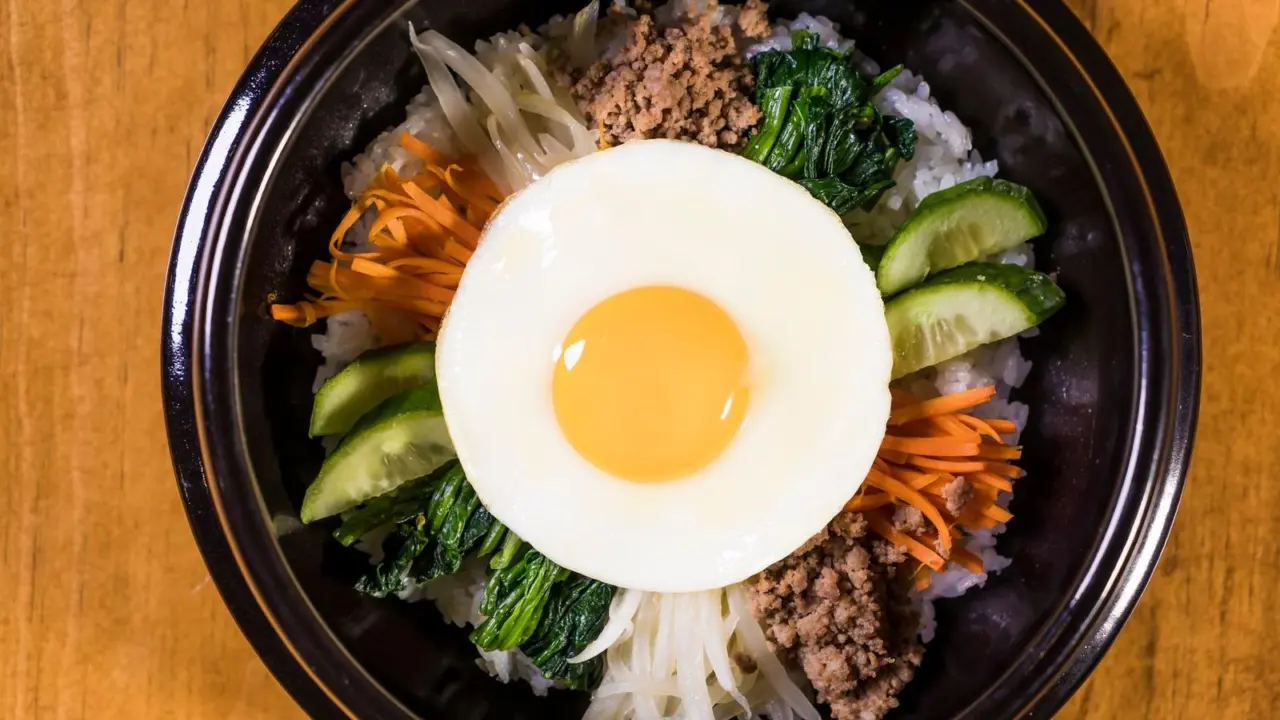
One well-known version, described by Mashed after cookbook author Maangchi, tops the rice with fresh vegetables such as bean sprouts, spinach and carrots. It also uses seasoned dried vegetables (fernbrake and bellflower roots), beef, a fried egg and gochujang.
Here is the basic shopping list, with room to swap:
- Rice: short-grain white rice is the usual base.
- Namul: a mix of fresh and rehydrated dried vegetables, each seasoned on its own.
- Protein: seasoned beef is common, and sliced pork, seafood or nothing at all also work.
- Egg: fried, or raw if you use a hot stone pot.
- Sauce: gochujang (chilli paste), though doenjang (fermented soybean paste) or ganjang (soy sauce) also appear.
- Finish: sesame oil, often drizzled on top.
Traditionally the bowl is built around five flavours: salty, sweet, hot, sour and bitter, according to National Geographic. That is a useful checklist when you plan toppings, because a bowl that is all soft and salty will taste flat.
Bibimbap recipe, step by step
Bibimbap is mostly assembly, but the work is in the prep. Each topping needs its own seasoning and its own cooking method, according to the Maangchi recipe summarised by Mashed.
- Cook short-grain white rice and keep it warm while you work on the toppings.
- Rehydrate any dried vegetables in boiling water, drain them, then sauté lightly with garlic and sesame oil.
- Cut carrots into thin matchsticks, salt them, then sauté.
- Blanch or sauté the other fresh vegetables, such as spinach and bean sprouts, and season each one separately.
- Cut lean beef finely and marinate it in garlic, soy sauce, honey and sesame oil. Give it as long as you can. Then stir-fry it or, as in the Maangchi recipe, serve it raw.
- Fry an egg. For a neater look, cook the white and yolk separately so the colours stay distinct.
- Spoon rice into a bowl and arrange each topping in its own band, with the egg in the centre and gochujang alongside.
- Drizzle on sesame oil, then stir everything together before the first bite.
Amounts are up to you. Because there is no single correct combination of toppings, you can make it your own with what you like or what is in the fridge.
The arrangement matters, though. A bowl of random leftovers tossed over rice does not make bibimbap, so lay the toppings out attractively before you mix.
Making the dolsot version with crispy rice
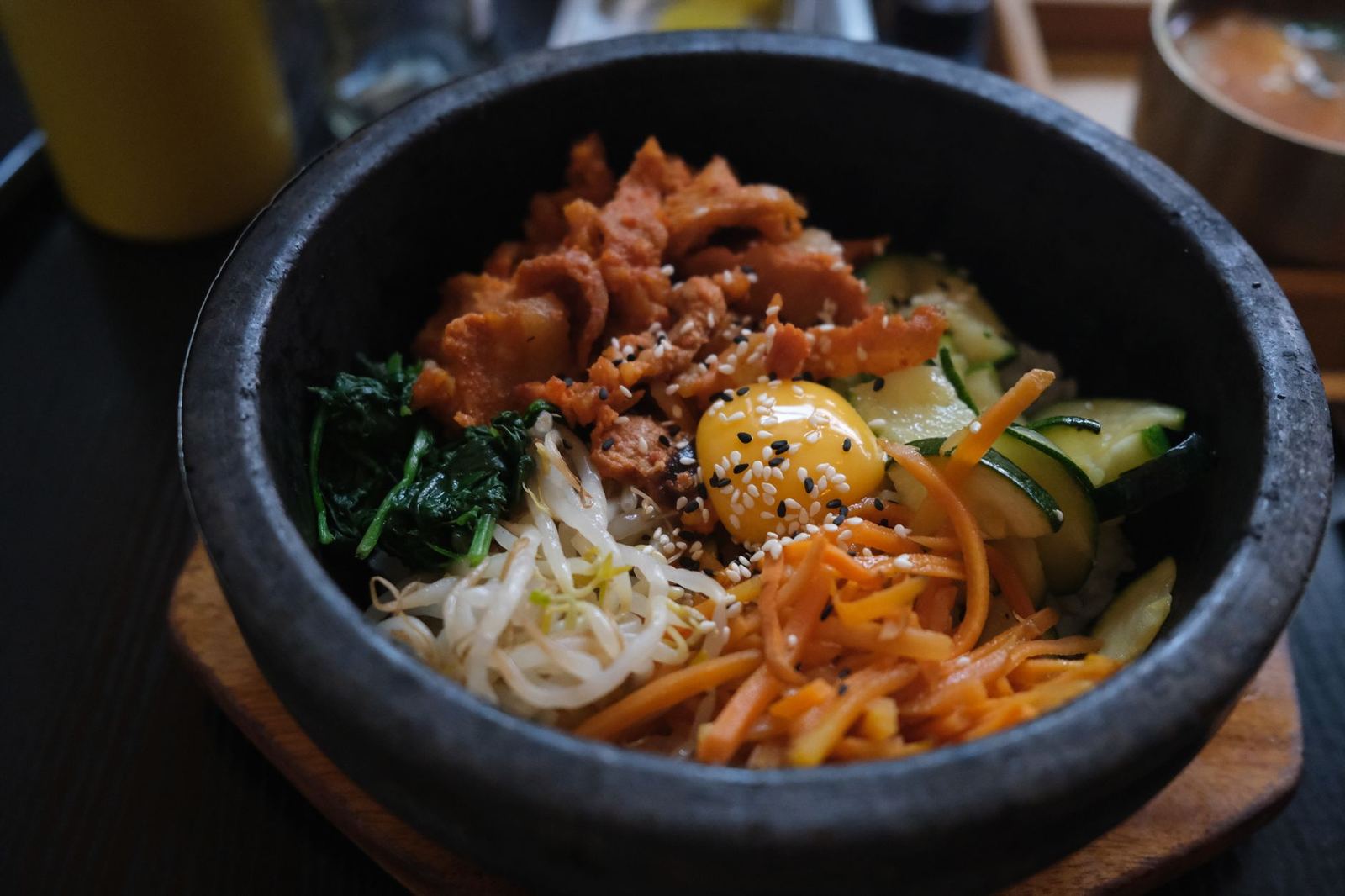
A dolsot is a stone pot, and dolsot bibimbap is named after the heated pot it is served in. The hot stone toasts the rice that touches the bottom until it turns golden and crunchy.
To make it, lightly grease a heated stone pot with sesame oil, add the rice, and arrange the toppings as usual. Instead of a fried egg, you can crack a raw egg into the pot, where the heat cooks it as you stir.
The pot stays very hot, so do not touch the bowl while you eat. National Geographic calls this style more of a restaurant speciality than a home dish. It also says the technique was reintroduced in restaurants in the 1960s after nearly disappearing.
Swaps and regional ideas
The vegetables change with the region and the season. In spring, National Geographic says to expect tender shoots and kimchi made with young radish heads, while winter bowls may be full of rehydrated dried plants.
Some regional styles to borrow from:
- Jeonju: the rice is cooked in beef bone broth, and the traditional bowl holds 30 different ingredients in a heated brass bowl, per National Geographic.
- Jinju: features yukhoe (beef tartare) and mung bean jelly.
- Tongyeong: brims with seaweed and seafood.
- Hoedeopbap: a coastal style whose name translates as “raw fish covering rice”.
- Mountain regions: forest vegetables (sanchae) on a barley base, with no meat.
The same source notes that short-grain white rice can be replaced with barley, millet, or a mix of grains and beans. Pork or seafood can stand in for beef, and you can skip meat and fish entirely.
To round out the meal, you can read how to make kimchi for a homemade side. If you would rather cook meat at the table another night, how to eat korean bbq is the next stop.
Where bibimbap comes from
The origin of bibimbap is unknown, according to Wikipedia. Some scholars link it to mixing the food offerings from an ancestral rite, called jesa, in a bowl before eating.
The earliest name, hondon-ban, appears in a book written by Bak Dongnyang around 1590. The first known recipe is in the Siuijeonseo, an anonymous cookbook from the late 19th century, per the same Wikipedia entry.
Ordinary people ate it on the eve of the lunar new year, when the answer to leftover side dishes was to put them all in a bowl of rice and mix. That frugal, flexible spirit is why the dish suits a home kitchen so well.
Frequently asked questions
Do I have to use beef in bibimbap?
Show answer
No. Beef is common, but pork, raw fish and seafood are also used, and some versions have no meat or fish at all, according to National Geographic.
Should I mix the bowl before eating?
Show answer
Yes. The name means mixed rice, and the neat arrangement is meant to be stirred together before you start.
Can I use rice other than white rice?
Show answer
Yes. Short-grain white rice is the usual base, but barley, millet or a mix of grains and beans can replace it.
What is gochujang?
Show answer
Gochujang is a chilli pepper paste. It is a standard seasoning for bibimbap, though doenjang or soy sauce also appear in some versions.