
Standing in Seoul with no idea what to say? These Korean greetings cover it: use 안녕하세요 (annyeonghaseyo) for hello with almost anyone, and 안녕히 가세요 or 안녕히 계세요 for goodbye, depending on who leaves.
Greetings are one of the first steps when you learn korean from the ground up.
| Item | Value |
|---|---|
| Polite hello | 안녕하세요 (annyeonghaseyo) |
| Casual hello | 안녕 (annyeong) |
| Goodbye to someone leaving | 안녕히 가세요 (annyeonghi gaseyo) |
| Goodbye to someone staying | 안녕히 계세요 (annyeonghi gyeseyo) |
| Hello on the phone | 여보세요 (yeoboseyo) |
| Speech levels | 7 in total, 4 in daily use |
These phrases come from StoryLearning’s guide to Korean greetings and LingoDeer’s guide, dated 07 Feb 2022. Teaching sites can revise their material, so check the source before you rely on the figures.
How do speech levels change Korean greetings?
Korean has speech levels, which are how you show respect to the person you are talking to. LingoDeer says there were originally 7 speech levels, and only 4 of them are generally used in daily life. For greetings, you can think of two groups: polite and casual.
Three clues help you choose between them: the listener’s age, their status and their relative social position. Here is how the two groups play out:
- Polite speech suits strangers you meet in daily life, such as a clerk or a bus driver, and anyone older or of higher status than you.
- Casual speech suits friends of the same or younger age, and people who are clearly younger than you.
Be careful with the word friend. LingoDeer points out that if a friend is older than you, you should still use the polite hello unless that person allows you to go casual. When you are unsure, go polite.
Saying hello in Korean
Four hellos cover most of the situations you are likely to meet. Each one sits at a different level of formality:
- 안녕하세요 (annyeonghaseyo): the polite hello and the safe default.
- 안녕 (annyeong): the casual “hi” for close friends and family.
- 안녕하십니까 (annyeong hasimnikka): a very formal hello.
- 여보세요 (yeoboseyo): the hello you use on the phone.
StoryLearning says you can rely on 안녕하세요 for pretty much all social situations, and that it is a safe bet if you are unsure how to greet someone. It works for greeting a cashier in a shop or a colleague in the office. It can also be used at any time of day, and even to say goodbye.
Koreans tend to bow their head slightly when they say it, as another way of showing respect. If you raise the intonation at the end, the greeting becomes a question. Keep it as a plain greeting when you simply walk in or meet someone.
The casual 안녕 is the same phrase with the -하세요 dropped, so it is easy to remember. StoryLearning advises avoiding it with people more senior than you or with strangers, and saving it for close friends and family. Linguatics adds that Korean does not tend to change the greeting depending on the time of day, so one hello does the job from morning to night.
The very formal 안녕하십니까 is unlikely to be needed by a visitor. You might come across it in institutional or more formal contexts, and StoryLearning notes that the formal style is the default in the Korean military, which is why military dramas use it.
The phone hello 여보세요 is a shortened version of the phrase “look here”, according to StoryLearning. LingoDeer notes it is almost only used on the phone, or when you want to get someone’s attention. Because you often do not know who is on the other end, you do not need to weigh speech levels for this one.
Goodbye in Korean: are you leaving or staying?
Korean has no single polite goodbye. StoryLearning notes that the version of bye you use depends on whether you are staying or leaving.
- If the person you are talking to is the one leaving, say 안녕히 가세요 (annyeonghi gaseyo).
- If you are the one leaving, say 안녕히 계세요 (annyeonghi gyeseyo).
Both phrases start with 안녕히, the adverb form of 안녕 (good health or peace), which is 안녕히 (peacefully). The ending is what changes the meaning. 가세요 is an honorific way to say “go”, while 계세요 is the honorific form of 있다, the verb for being or staying.
The polite 잘 가요 (jal gayo) is another way to wish someone well when they leave. For close friends and family you can make it informal by dropping the 요 and simply saying 잘 가.
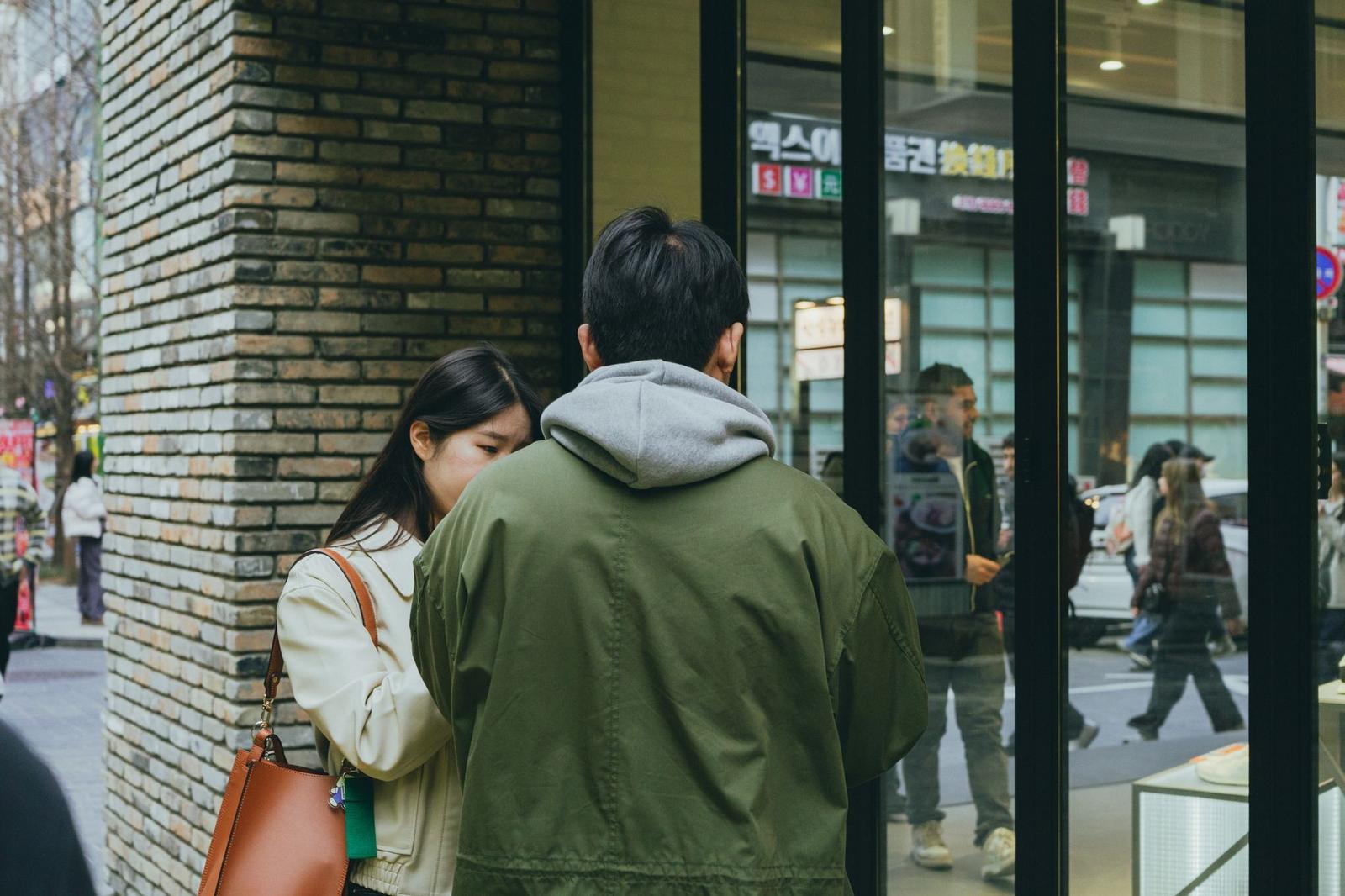
For a quick, casual goodbye, 안녕 works perfectly fine with someone close to you. KoreanClass101 points out that this makes 안녕 handy because one word can be both hello and bye. StoryLearning also notes that 안녕하세요 can be used to say goodbye, though the leaving and staying phrases are the clearer choice.
Other everyday Korean greetings
Beyond hello and goodbye, a handful of phrases will help you in real conversations. Learn these next:
- 만나서 반갑습니다 (mannaseo bangapseumnida): nice to meet you.
- 오랜만이에요 (oraenmanieyo): long time no see.
- 잘 지내세요? (jal jineseyo?): how are you?
- 잘 자요 (jal jayo): sleep well.
- 어서 오세요 (eoseo oseyo): welcome.
- 밥 먹었어요? (bap meogeosseoyo?): have you eaten?
When you first meet someone, LingoDeer says it is better to say nice to meet you than hello. You can say 만나서 반갑습니다 to anyone you meet for the first time. It does not have a casual counterpart, because it is only used in formal situations.
For long time no see, you can say 오랜만이에요 when you meet someone you have not seen for a long time. In a really formal situation, such as with your boss, LingoDeer suggests 오랜만입니다 (oraenmanimnida) instead.
The question 잘 지내세요? is something many Korean people say after 안녕하세요, mostly to someone they already know. LingoDeer adds that people normally do not use it before 안녕하세요, because it might seem awkward.
The phrase 잘 자요 is a polite way to say sleep well, according to KoreanClass101. For a time-based goodbye, you can also use the “see you” pattern. Your 에 봐요 sentence can name a time, and pairing it with korean numbers lets you say a clock time, such as 다섯시에 봐요 (daseos-sie bwayo) for see you at 5 o’clock.
The same pattern works for days. KoreanClass101 gives 월요일에 봐요 (wol-yoile bwayo) for see you on Monday, and the set phrases 또 봐요 (tto bwayo) for see you again and 다음에 봐요 (daeume bwayo) for see you next time.
Tips for using Korean greetings naturally
A few habits will make your greetings sound more natural. Keep them in mind before you speak:
- Go polite first. If you are unsure of the situation, 안녕하세요 is the safe choice.
- Wait for permission before you go casual with someone older, even if you think of them as a friend.
- Do not open with 잘 지내세요?. Say 안녕하세요 first.
- Match the goodbye to your position: leaving or staying.
- Add a slight bow with a polite hello.
You may also hear 좋은 아침이에요 (joeun achimieyo) for good morning. KoreanClass101 says this is not a traditional Korean expression and is not as common as 안녕하세요 or 안녕, so you can safely skip it.
Reading the script helps your pronunciation. Linguatics says you do not need to know Hangul to read its romanized phrases, but if you plan to keep going, learning Hangul gives you the best pronunciation, so see how to read hangul in our how to read hangul guide.
Frequently asked questions
What is the safest way to say hello in Korean?
Show answer
It is 안녕하세요 (annyeonghaseyo). StoryLearning says you can rely on it for pretty much all social situations.
Can I say 안녕 to everyone?
Show answer
No. It is casual, so save it for close friends and family. StoryLearning advises avoiding it with people more senior than you or with strangers.
Which goodbye do I use when I am leaving?
Show answer
Say 안녕히 계세요 (annyeonghi gyeseyo) to the person who is staying. If you are the one staying and the other person leaves, say 안녕히 가세요 (annyeonghi gaseyo), as KoreanClass101 explains.
Is there a Korean phrase for good morning?
Show answer
There is 좋은 아침이에요 (joeun achimieyo), but KoreanClass101 says it is not a traditional expression. Most people simply use 안녕하세요, which works at any time of day.
How do I say hello when I answer the phone?
Show answer
Say 여보세요 (yeoboseyo). StoryLearning calls it a standard way of answering the phone in Korea.