Planning your first trip and unsure where to start? This Busan travel guide gives you the short answer: stay near Haeundae or Seomyeon, give the city three or four days, and spend them on beaches, seaside temples and markets.
Busan is one stop on a wider trip, so the south korea travel guide helps you place it on the map.
| Item | Value |
|---|---|
| Seoul to Busan by KTX | About 2 hours 15 to 40 minutes, around 59,800 won |
| Seoul to Busan by express bus | 4-5 hours, around 28,000 to 34,000 won |
| Haeundae Beach length | 1.5 kilometres |
| Subway network | 4 main lines |
| Most comfortable seasons | March-May and September-November |
| Casual meal | Roughly ₩10,000-15,000 |
These figures come from MileAsia (transport, subway and Haeundae) and Travelling South Korea (seasons and meal costs). Fares, timings and prices can change, so check the source before you rely on them. Beyond the table, the sections below add the temple, market and neighbourhood details, with each figure linked to the page it came from, so you can check it yourself.
How many days do you need in Busan?
Busan stretches along the coast rather than around one centre, so your plan depends on how much ground you want to cover. One guide says two to three days are enough to cover the city properly, according to MileAsia. Another advises at least three or four days to see the essentials and still have time to wander, as Travelling South Korea puts it.
A third guide, The Soul of Seoul, breaks it down by pace:
- 2 days: the highlights.
- 3 days: more of the coast and culture.
- 4 days: the ideal length.
If you are torn, choose the longer option and keep one afternoon free. Busan rewards slow wandering more than ticking off sights.
Beaches and coastal views
Haeundae is the beach most visitors have heard of. MileAsia describes it as 1.5 kilometres of sand backed by tower hotels, and says that in July and August it is extremely crowded, with over a million visitors on peak weekends. The same source calls September and October beautiful and quiet, and the best time to go.
Gwangalli is the calmer neighbour. The Soul of Seoul describes a 1.4 kilometer stretch of fine sand lined with restaurants and cafes, while MileAsia notes it faces the illuminated Gwangan Bridge and has a better evening atmosphere.
For rocky scenery, head to Taejongdae, the southern tip of Yeongdo-gu. On a clear day you can spot Tsushima, an island of Japan, and The Soul of Seoul says admission to the cliff park is free.
Igidae is a quieter coastal walk with views across to Gwangalli and Haeundae. The same guide notes the area was only for military use until 1993, and that its trails run between 2 and 4 kilometers.
Temples and hillside villages
Most Korean temples sit in mountain forests, but Haedong Yonggungsa faces the sea. The Soul of Seoul says it was first founded in 1376, with twelve zodiac statues on the approach and 108 lantern-lined steps leading down to the temple.
Plan your day around these three stops:
- Haedong Yonggungsa: about 30 minutes from central Busan by bus, and best at sunrise when it is quiet, according to MileAsia.
- Beomeosa: a working temple in a pine forest on Geumjeongsan, around 40 minutes from central Busan by subway and bus, with hiking trails above it (MileAsia).
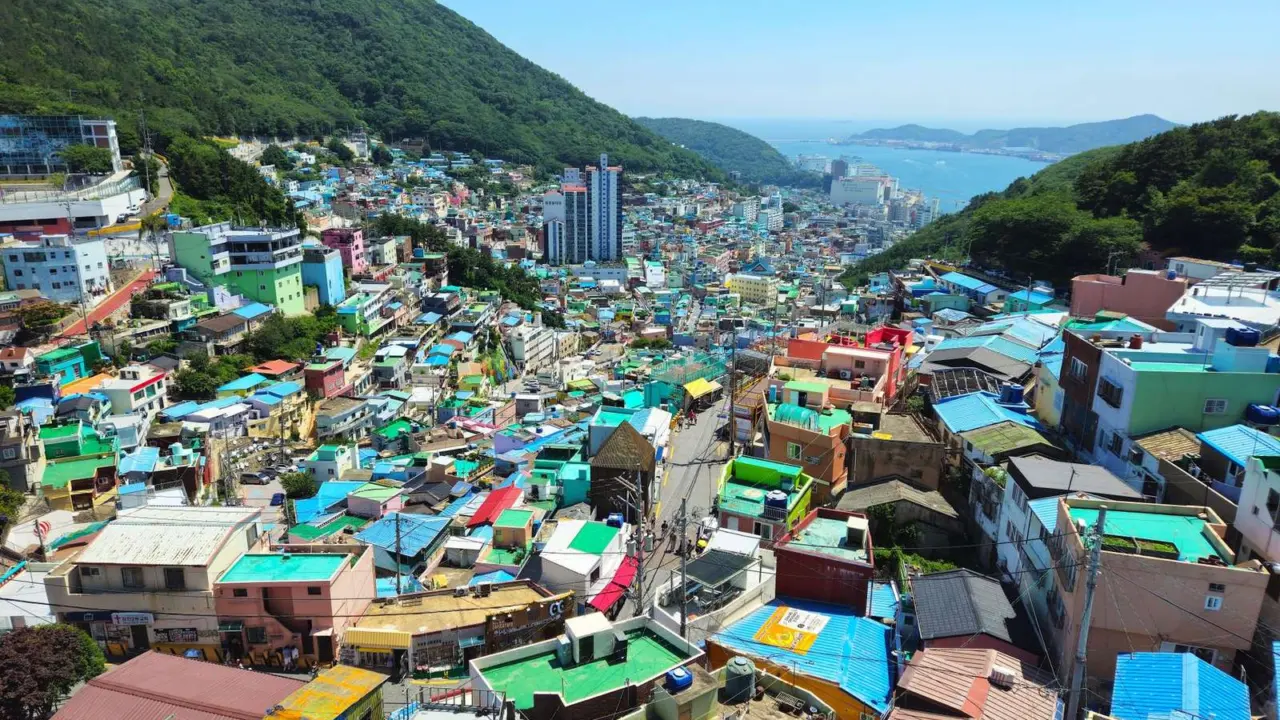
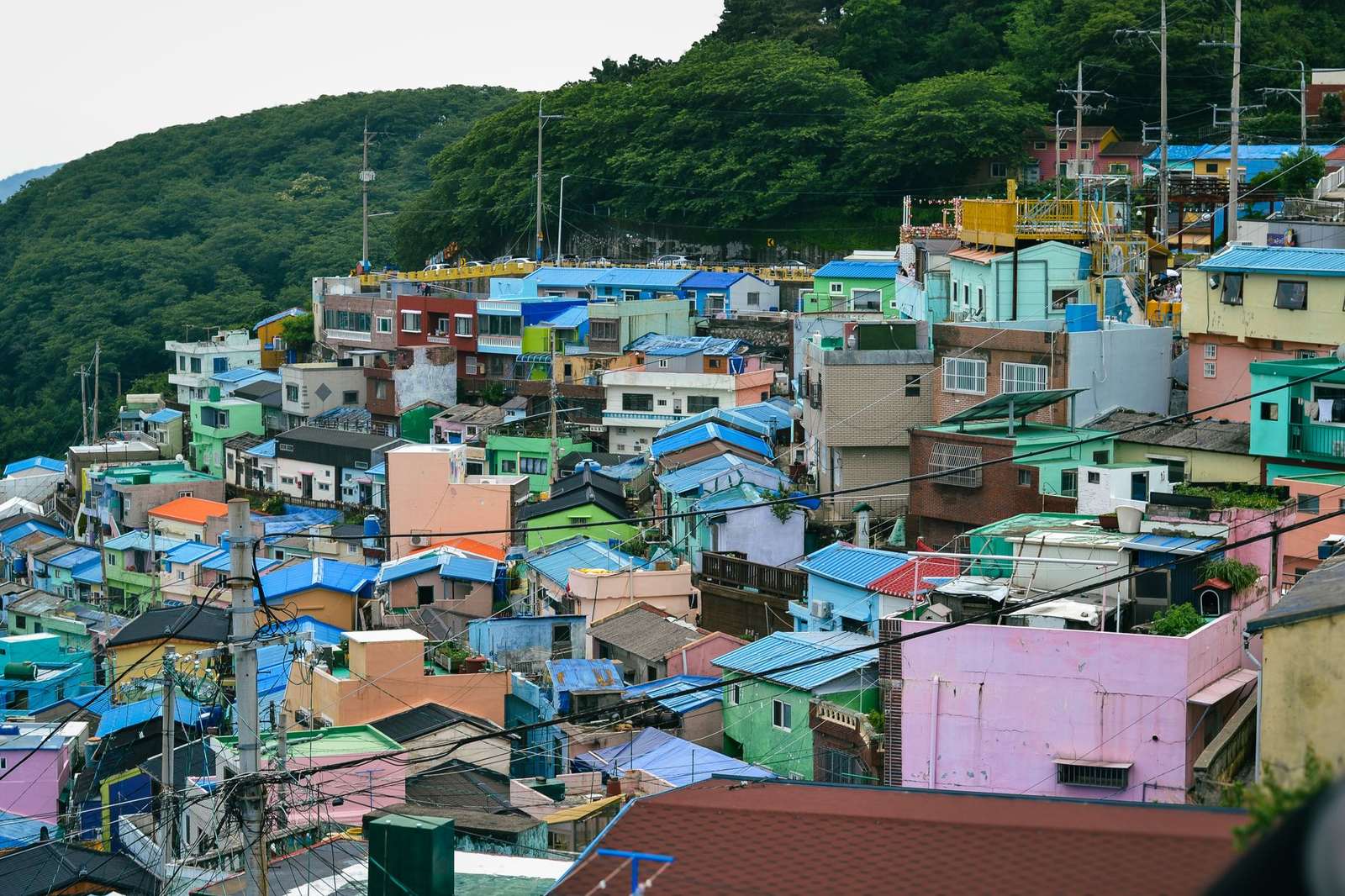
- Gamcheon Culture Village: brightly painted houses on a hillside, where the same guide suggests going on a weekday morning to have it mostly to yourself.
Beomeosa is far less visited than the seaside temple. If you only have time for one, pick based on whether you want ocean views or forest quiet.
Markets and what to eat
Jagalchi is described by MileAsia as Korea’s largest seafood market. Live tanks fill the first floor, restaurants that prepare what you bought sit on the second, and the outdoor harbour stalls sell fresh oysters, raw sea urchin and grilled shellfish from 7 am onwards.
Nearby, Gukje Market is the main traditional market for clothing, street food and household goods. BIFF Square next door is lined with snack stalls selling odeng (fish cake soup) and hotteok (sweet pancakes).
Look out for these local dishes:
- Dwaeji gukbap: pork and rice soup, Busan’s comfort food.
- Milmyeon: cold wheat noodles in icy broth, popular in summer.
- Ssiat hotteok: a pancake filled with seeds and brown sugar.
- Daegutang: a cod soup.
- Fresh seafood: at Jagalchi or the harbour stalls.
Budget-wise, Travelling South Korea gives a rough range of ₩10,000-15,000 for a casual meal, and notes that these are approximate and vary by venue and season.
Getting to Busan and getting around
The KTX is the standard way from the capital. MileAsia lists 2 hours 15 to 40 minutes for around 59,800 won, versus 4-5 hours by express bus for around 28,000 to 34,000 won, and around 1 hour by plane from Gimpo to Gimhae.
Before you leave the capital, the things to do in seoul page is a handy place to plan the days that come first.
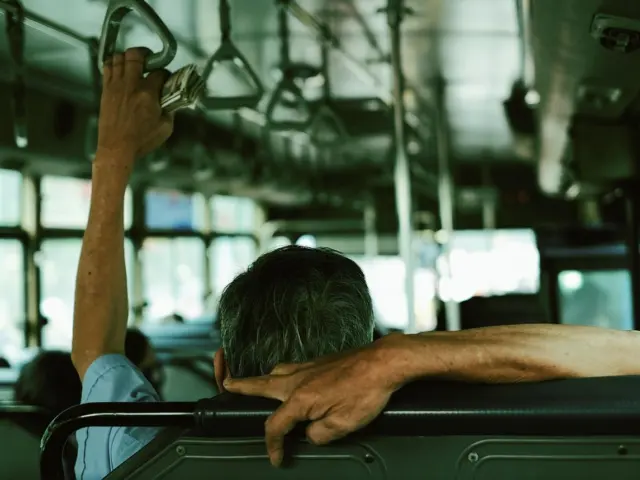
Once you arrive, the subway does most of the work. MileAsia says it has 4 main lines covering all major areas, and Travelling South Korea puts typical travel times between districts at 20-40 minutes by subway.
- Buy a T-Money card at a convenience store or station.
- Tap in and out on the subway and buses.
- Use Naver Maps or KakaoMap for directions.
- Plan your return before midnight, as public transport stops around then in most cities, or use taxis and ride apps.
Where to stay and when to go
For first-timers, The Soul of Seoul recommends Haeundae for beach and easy sightseeing, or Seomyeon for a central area close to transit. MileAsia adds that Nampo-dong or Seomyeon are within walking distance of Jagalchi Market, Gukje Market and BIFF Square, and are better value than Haeundae.
On timing, Travelling South Korea calls spring (March-May) and autumn (September-November) the most comfortable seasons, with summer hot and humid. Cherry blossom and foliage seasons draw crowds, so book early.
Film fans may like October, when Kayak says the city hosts the Busan International Film Festival. If you want more coastline afterwards, the jeju island travel guide is a natural next read.
Frequently asked questions
How long does it take to get from Seoul to Busan?
Show answer
By KTX it takes 2 hours 15 to 40 minutes, and by express bus 4-5 hours, according to MileAsia. The bus is cheaper but much slower.
When is the best time to visit Busan?
Show answer
Travelling South Korea names March-May and September-November as the best months. Summer suits beaches but is hot, humid and busy.
Which area should first-timers stay in?
Show answer
The Soul of Seoul suggests Haeundae or Seomyeon. Haeundae is better for the beach, while Seomyeon is closer to transit.
Do you need a T-Money card in Busan?
Show answer
It is not compulsory, but Travelling South Korea says T-Money cards work across public transport and are sold at convenience stores and stations. It also advises carrying some cash, as many small places are cash-only.